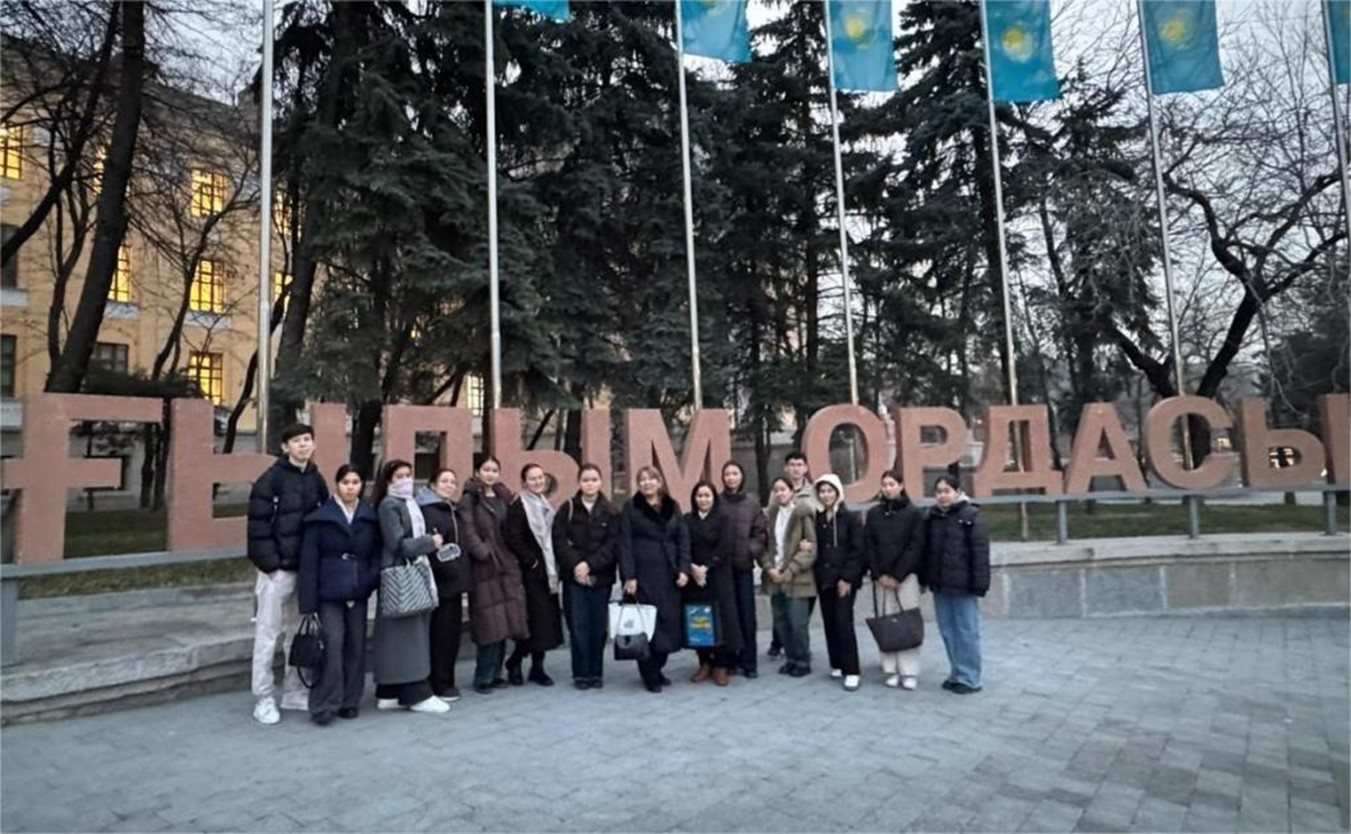
On December 5, 2025, under the guidance of lecturers Raushan Mukhambetovna Shaikhymbekova and K. S. Nurzhanova from the Department of Molecular Biology and Medical Genetics, an educational and cognitive trip was organized for the students of the curatorial groups M25-011k, M25-012k, M25-013k, and M25-014k to the “Science Orda” RSE in Almaty. The main goal of the trip was to enhance students’ scientific research culture, introduce them to the system of preserving the country’s scientific heritage, provide an understanding of the activities of scientific institutions, and allow them to become more familiar with the intersection of science and culture.
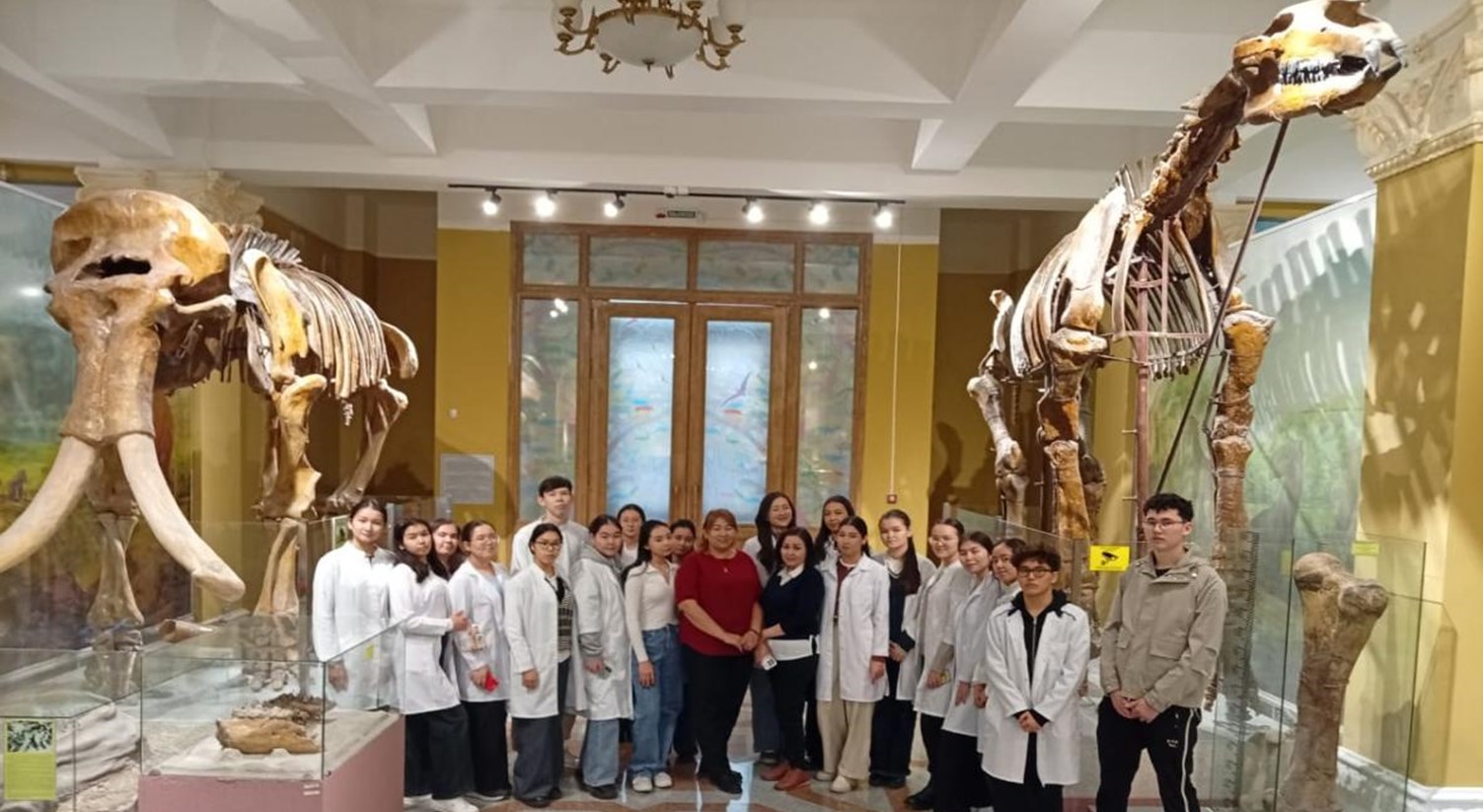
- The Museum of Nature, which showcases valuable collections related to Kazakhstan’s fauna and geological history;
- The Archaeological Museum, where archaeological artifacts, excavation results, and relics of ancient cultures of Kazakhstan are displayed;
- The Museum of Rare Books, which preserves unique manuscripts, ancient publications, historical books, and rare literary treasures;
- The Museum of the History of Science in Kazakhstan, where materials related to the lives and works of Kazakh scientists from different eras, scientific discoveries, and research history are presented.
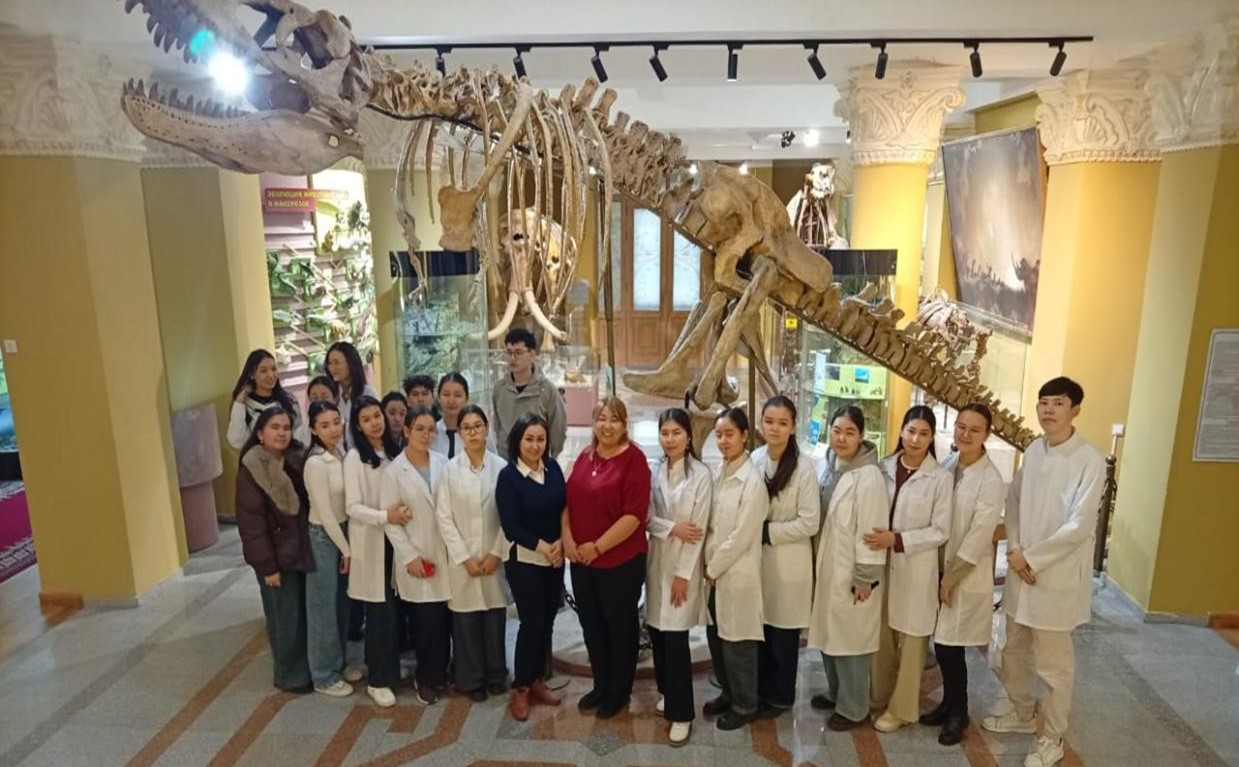
During the excursion, the students first familiarized themselves with the structure of the Central Scientific Library and the preservation methods for rare books and manuscripts. They received detailed information about the library’s historical development, the services it provides to the scientific community, and the opportunities to use modern informational resources. Afterward, the students visited the Museum of Nature, where they observed various exhibits related to the fauna and flora of Kazakhstan, including fossil remains and animal collections. In the Archaeological Museum, they explored archaeological finds related to the Bronze Age, Early Iron Age, and the medieval period, which highlight the development of ancient cultures in Kazakhstan.
At the end of the trip, the students visited the scientific archive, where they were introduced to the processes of document preservation, processing, and usage for scientific purposes. Archive staff explained the historical and cultural significance of archival documents and the ongoing digitization process.